The deal in brief
- Magic Vision (founded 2023, Meda, Italy) raised €600,000 in a pre-seed round led by SixS, an Italian software company that operates Gecos, a nonprofit-sector management platform, alongside unnamed Italian business angels with backgrounds in law, compliance, and business development.
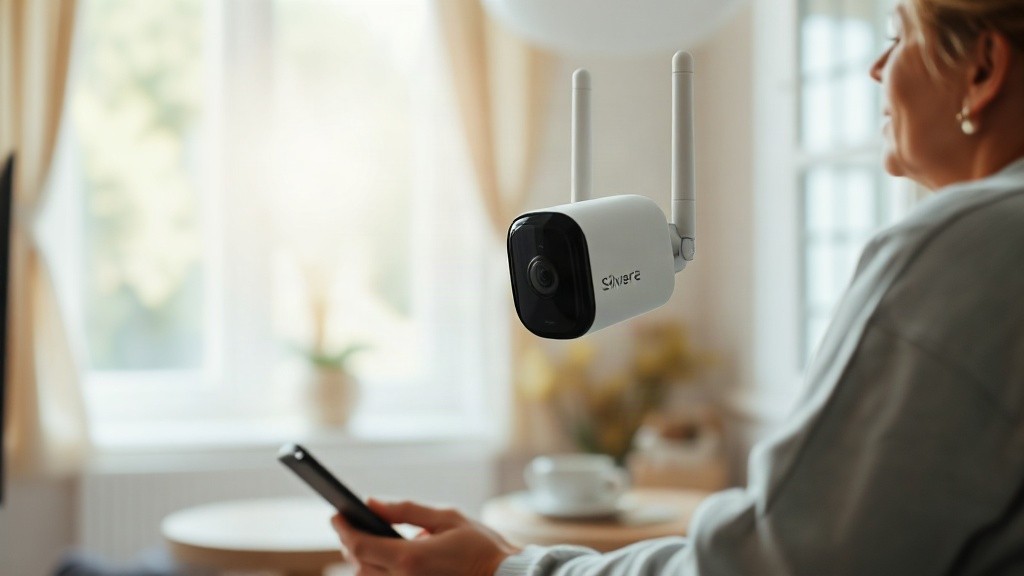
- The company's flagship product, Silver Eye, uses proprietary AI, computer vision, and environmental sensors to detect falls and flag behavioural changes in older adults; no wearable is required, and the company says data is processed locally via edge AI with no images stored or transmitted.
- The company says more than 200 sensors are installed across pilot and commercial projects with Italian care providers, and it is targeting coverage of over 100 monitored individuals by end of 2026.
- The deciding question: can a computer-vision elderly-care system win a market where hardware-free, passive monitoring is the real unlock — or does this remain a niche DeepTech product struggling to reach scale?
1. Team
The two named founders are Lorenzo Mauri (CEO) and Federico Lanzani (CTO), supported by four additional co-founders described collectively as having backgrounds in AI and computer vision. Six co-founders for a pre-seed is an unusually large founding group, which can signal strong technical depth but also raises questions about equity structure and decision-making clarity. No prior exits, named employers, or commercial track records are referenced in either source. The angel cohort brings legal and compliance expertise, relevant in a regulated care setting, but no named care-sector operators or commercial veterans appear among the investors.
Open question.
2. Market
Silver Eye targets senior living facilities, cohousing arrangements, private homes, and residential care settings — a broad initial scope rather than a focused wedge. The European eldercare market is large and structurally growing, driven by demographic ageing, but it is deeply fragmented: purchasing decisions sit with individual facilities, regional operators, and local authorities, each with long procurement cycles and constrained budgets. Neither source supplies a total addressable market figure or competitive landscape. The wearable-free positioning addresses a known adoption barrier — compliance and dignity concerns — but camera-based systems face resistance around perceived surveillance, particularly in residential settings.
Open question.
3. Product
Silver Eye processes data at the edge, stores no images, and transmits no video — a meaningful privacy architecture for a regulated environment. The company says the development phase is now complete and the round has funded initial commercialisation. What the public sources do not reveal is what the sensor hardware consists of, whether it is proprietary or third-party, and what per-unit cost and installation complexity look like. Edge AI for fall detection is an active area with established players; the durability of any moat depends on the proprietary algorithms and the data advantage accumulated through deployment, neither of which is quantified.
Open question.
4. Business model
Neither source describes the pricing model: whether Silver Eye is sold as hardware with a recurring software or monitoring fee, licensed per resident, or priced per facility. This matters enormously. Hardware-plus-AI models in care settings typically carry high upfront installation costs, modest recurring revenue per unit, and gross margins well below pure-software benchmarks. The lead investor SixS operates Gecos, a nonprofit-sector management platform, which suggests a possible distribution angle into nonprofit care operators — but no formal partnership or channel agreement is mentioned in the sources.
Deciding factor.
5. Traction and funding
The company says more than 200 sensors are installed and claims a target of over 100 monitored individuals by end of 2026. The sources do not distinguish between pilot deployments and paying commercial contracts, and no revenue figure, average contract value, or retention metric is disclosed. A €30,000 non-dilutive award is mentioned but not attributed to a named programme. No valuation is disclosed, so the entry price for investors is unverifiable from public material. The founders say a follow-on round is in preparation to fund Italian expansion and European market entry.
Open question.
6. What the sources leave open
- The sources do not distinguish paying customers from pilot deployments. The case assumes at least some of the 200-sensor installations represent commercial contracts, but this is unconfirmed.
- No pricing or revenue model is described. Whether the business is hardware-led, subscription-led, or a hybrid is unknown; the case assumes a recurring-revenue component exists, but that is an assumption.
- The sensor hardware is not characterised. Whether it is proprietary or commodity third-party hardware affects capital intensity, gross margin, and competitive replicability — none of which can be assessed from the sources.
- SixS's strategic rationale as lead investor is not explained beyond its role as a nonprofit-software operator. The case assumes a distribution or channel logic, but no formal agreement is mentioned.
- No competitive landscape is provided. The sources do not name any rival systems or explain why Magic Vision's edge-AI approach is differentiated from existing camera-based or radar-based monitoring products in the European market.
7. What would have to be true
- By end of 2026: the company converts its pilot deployments into a baseline of paying contracts sufficient to demonstrate a repeatable sales motion and a clear unit economics profile — revenue per sensor and gross margin per site.
- Within 12 months of this round: the follow-on round closes at a step-up valuation, attracting at least one investor with a care-sector or MedTech distribution network, signalling that the commercial model is legible to specialist capital.
- Within 18 months: Silver Eye is deployed in at least one non-Italian European market, with evidence that procurement and regulatory pathways are navigable without rebuilding the go-to-market from scratch.
The case for FUND: The privacy-preserving, wearable-free architecture solves a real adoption problem in eldercare; 200 installed sensors three years from founding is concrete early progress; and the lead investor's position in nonprofit-sector software offers a plausible low-friction distribution channel into Italian care operators.
The case for PASS: No revenue, pricing model, or gross margin data is public; the hardware dependency makes the path to software-like margins structurally difficult; and at six co-founders with no disclosed exits, the team's ability to navigate a long, fragmented, budget-constrained institutional sales cycle is unproven.